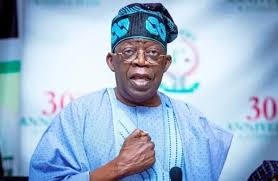
Recent politics in Nigeria, from the government’s perspective, have been shaped largely by economic reforms, fiscal restructuring, security policies, and efforts to rebuild investor confidence under the administration of Bola Ahmed Tinubu.
Since taking office, the government has consistently argued that many of its decisions are designed to correct long-standing structural problems in the Nigerian economy and reposition the country for long-term growth.
Economic reform has been the government’s top priority. In order to restore public finances and cut waste, the administration argues that measures like tax restructuring, exchange rate adjustments, and the elimination of fuel subsidies are essential. Former systems, according to government authorities, hindered investment, undermined national revenue, and promoted corruption.
The presidency claims that the measures will enhance Nigeria’s budgetary position, increase transparency, and make the country’s economy more competitive.
Additionally, the administration has placed a strong emphasis on financial accountability and budget management. The administration unveiled a ₦58.18 trillion budget for infrastructure, security, agriculture, healthcare, and economic recovery at the end of 2025.
President Tinubu described it as a “Budget of Consolidation, Renewed Resilience and Shared Prosperity,” promising stricter implementation and an end to overlapping budget cycles that have historically slowed development projects.
The oil and gas industry is another significant area of government policy. Reforms mandating the direct transfer of oil and gas income into the federation account were recently implemented by the administration. According to officials, this action will guarantee that the federal, state, and local governments get their fair share of national revenue, decrease leakages, and enhance accountability. In order to strengthen reforms and boost productivity in the energy sector, the government also established a Presidential Petroleum Reform Taskforce.
Infrastructure development remains central to the government’s political agenda. The administration has promoted large-scale road and energy projects as part of its “Renewed Hope” programme. Recent efforts include new highway projects aimed at improving trade and transportation across Nigeria, as well as reforms in the electricity sector through the proposed Grid Asset Management Company (GAMCO), which is expected to improve transmission and power distribution.
Another significant concern from the government’s perspective is security. The administration has warned time and time again that economic progress and national stability are threatened by insecurity. The government responded by announcing a more stringent national counterterrorism strategy that targets armed gangs, violent militias, kidnapping, banditry, and terrorism. Stronger security operations and intelligence coordination, according to officials, are required to boost investment and rebuild public trust.
According to the administration, recent measures are already showing results. Officials cite lowering inflation trends, steady foreign reserves, and increased investor interest as proof that the economy is steadily improving. Additionally, the administration emphasizes its efforts to draw in foreign investment, particularly in infrastructure and energy.
Divisions within the opposition are also advantageous to the ruling party politically. The government’s position has been reinforced by recent losses in efforts to rally the opposition in advance of the 2027 elections. The fracturing of the opposition, according to analysts, has made it more challenging for opposing parties to attack the administration in solidarity.
Nonetheless, the administration is still under fire for the way its policies affect society. Many citizens are questioning if reforms are improving daily life fast enough in light of rising living expenses, unemployment, and insecurity. Reactions to the reforms are divided; some Nigerians view them as harsh and ill-timed, while others embrace them as necessary sacrifices.
Overall, from the government’s aspect, recent politics in Nigeria is presented as a period of difficult but necessary transformation. The administration argues that its reforms are laying the foundation for long-term economic stability, improved governance, stronger institutions, and national development, even though the transition period remains challenging for many Nigerians.
I would like to make references to these platforms.
BUSINESS DAY.NG
STATEHOUSE.GOV.NG
REUTERS
You may also like to read this:
See The Complete List of Nigeria’s Registered Political Parties
There is love in sharing…