Nigeria should use its vital minerals to manufacture and Stop Exporting, says Okonjo-Iweala

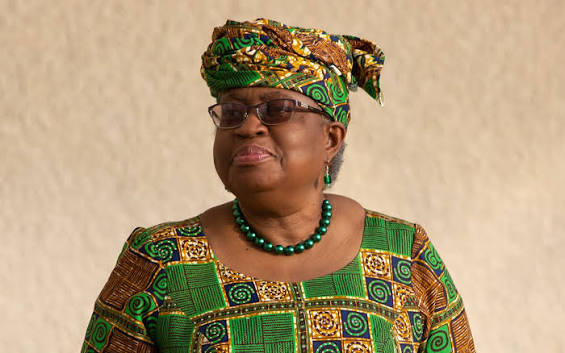
Dr. Ngozi Okonjo-Iweala, Director-General of the World Trade Organisation, has strongly advised Nigeria and other African countries to treat vital minerals before exporting them.
Nigeria has been urged to reconsider how it manages its abundant mineral riches, with new claims that decisions made today could determine the nation’s future prosperity.
She spoke at the Fireplace Dialogue on Building Africa’s Resilience in a Changing Global Economic Order on Wednesday at the 7th Africa Emerging Markets Forum in Abuja.
Former Finance Minister and Coordinating Minister of the Economy Dr. Ngozi Okonjo-Iweala has argued that Nigeria should use its vital minerals to manufacture electric vehicle batteries and related products, establishing itself as a key participant in the ongoing global green energy revolution.
She blamed the mining and export of vital minerals in their raw form for a large portion of the corruption, terrorism, and banditry in Nigeria and other regions of Africa.
She emphasized that there was a pressing need to diversify vital mineral supply chains due to changing geopolitics, and that failing to take action now would result in the loss of a big opportunity.
Citing Morocco’s use of its phosphate resources to produce electric vehicle components for international markets, especially for Chinese automakers, as well as comparable actions in Zambia, the DRC, Mozambique, Angola, and Nigeria to add value to critical minerals, she said that Africa’s leaders seemed to be heading in the right direction.
She went on to say that by utilizing its plentiful renewable energy potential to power mineral production, the continent may take advantage of green comparative advantages.
Additionally, she advocated for the diversification of international trading partners, departing from the current state of affairs in which imports and exports are concentrated in a small number of nations, thereby limiting options.
According to her, value chain investment could be attracted to areas outside of existing industrial networks, especially in Africa, Latin America, and Central Asia.
The people should be at the centre of leadership, she said, adding that the kind of leadership required to create a developed and economically strong Nigeria must listen to the people, be accountable to them, and have the nation’s interests at heart.
Nigerians must experience the benefits of reform in the real economy, she said, adding that there was a chance to create positive feedback loops of changed regulations, increased certainty, and better economic prospects for individuals and businesses worldwide, as opposed to negative feedback loops of uncertainty, fragmentation, and slower growth.
Mr. Olayemi Cardoso, the Governor of the Central Bank of Nigeria, advocated for the removal of trade restrictions within the African continent in his own speech.
He emphasized that nations must go beyond agreements and eliminate real trade barriers by enhancing transportation networks, harmonizing customs standards, and expediting and lowering the cost of cross-border payments. He said the African Continental Free Trade Area provided the platform to turn this global shift into an African advantage.
Second, he noted that the time of plentiful liquidity pursuing profits regardless of risk was ended and that capital had become choosy and impatient.
He said investors now had more choices and less tolerance for uncertainty, with capital increasingly flowing towards environments offering credibility, transparency, quality, consistency and strong institutions.
He said this meant Africa’s development ambitions could not depend solely on attracting foreign capital, and that the continent must instead mobilise more of its own resources, including pension and insurance funds, domestic savings and diaspora capital, channelling them into productive domestic investment.
According to him, Africa needs to go from being a technology consumer to a creator, creating African solutions to African problems and establishing companies that can export those solutions globally.
According to him, doing so would necessitate investing in the fundamentals of an AI-enabled economy, such as dependable electricity, reasonably priced connection, digital infrastructure, and a generation of AI-savvy young Africans capable of creating solutions for the continent and competing on a global scale.
He emphasized that Africa cannot advance with only half of its population involved and that the continent must educate youth for an AI-enabled economy and empower women to participate fully in the economy.
According to him, Africa has to develop into a place where young businesspeople may develop, grow, and compete without having to leave the continent in order to reach their full potential overseas.
The Post ‘Nigeria should use its vital minerals to manufacture and Stop Exporting, says Okonjo-Iweala’ initially appeared on TORI
You may also like to read this…
11 Proven Nigerian Food With Healthy Benefits You Should Try.
There is love in sharing…